Accounting plays a critical role in supporting a prosperous society.
The Department of Accounting prepares students to become the trusted consultants, accountants, managers, and analysts who reinforce and propel businesses and organizations in today's global marketplace. We work hard to make sure our undergraduate and graduate students find noteworthy jobs after graduation, whether they practice as public, private, or governmental accountants, or work in managerial positions that require an understanding of fundamental accounting concepts and principles. Our faculty members are known for their dedication to teaching and learning, and we're proud that our active research program helps us bring students the best practices in the accounting field.
Leadership
We go beyond the numbers to meet market demands and prepare our students to become the future of the accounting profession. Our students learn that accounting blends business expertise and knowledge with communication skills to improve organizational decision-making. We emphasize that accountants play a key role in the continued growth of a prosperous society, and that accounting, like nuances in other languages, both affects and is affected by the business reality and culture.
An important priority of our department is to ensure both short-term and long-term career success for each accounting graduate. We work toward that priority by providing a rigorous and relevant curriculum, dedicated faculty with extensive expertise, and student leadership and professional development opportunities. Our program provides not only the knowledge our students need to pass the CPA exam – our graduates exceed state and national pass rates on the CPA exam – and obtain a career position, but also delivers an excellent foundation for real business world success. Our employers describe our students as smart, hardworking, and career-minded.
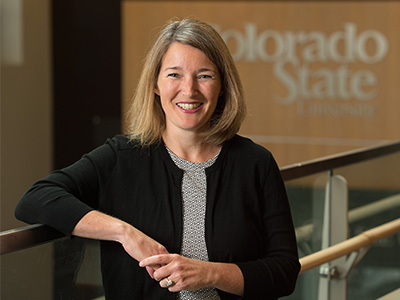
– Lisa Kutcher,
Chair and Professor
Advisory Board
The Department of Accounting Advisory Board is made up of business leaders acquainted with the needs of the business community, as well as the needs of the accountancy profession. The board is a vital link between the business community and the department, helping us serve the needs of our students, our alumni, and our business community. Board members advise us on our strategic direction and objectives, and ensure that our initiatives are informed by best practice and reflect the needs of the individuals and organizations it serves.

Assistant Professor, Accounting
Academic Programs
Our AACSB-accredited program reflects the breadth of knowledge you’ll need to sit for – and pass – the National Uniform CPA exam. You’ll leave the program with skills and confidence to secure competitive positions and exciting accounting roles in public firms or in industry. The bottom line: Your expertise means professional accomplishment no matter where your professional journey takes you.
The accounting concentration prepares you to practice as public, private, or governmental accountants, or work in business managerial positions that require an understanding of fundamental accounting concepts and principles.
Centers
Center for Corporate Financial Reporting
The Center for Corporate Financial Reporting promotes quality in financial reporting through educational outreach and research. An important part of this center is the Initiative for Professional Responsibility and Ethics in Accounting, which plays a significant role in expanding the knowledge and use of professional responsibility and ethics in all aspects of accounting. Contact us at (970) 491-4918 or chris.ritsema@colostate.edu